EPS Compactor Closing the Loop: polystyrene Production from Plastic Waste
2024-04-11
German chemical company BASF, along with Norwegian packaging company Vartdal Plast and furniture company Ekornes, has initiated a project to produce “circular polystyrene” from plastic waste, aiming to achieve energy saving and emission reduction goals. Progress has been made in the production and utilization of EPS. Vartdal Plast’s product manager, Mounir El’Mourabit, stated, “We are delighted to collaborate with BASF and Ekornes on this project. It demonstrates our joint commitment to a more sustainable future.”

BASF obtains the oil from its technology partner. They convert post-consumer plastic waste into this secondary raw material through a thermochemical process called pyrolysis. Otherwise, this plastic waste would be used for energy recovery or landfilled. BASF then supplies this new material to Vartdal Plast, which produces products for furniture company Ekornes. This chemical technology for EPS reuse can reduce carbon emissions by 50%. This technology not only proves that EPS packaging is a recyclable packaging material. And physical mechanical recycling methods can incorporate EPS waste into the EPS recycling system.
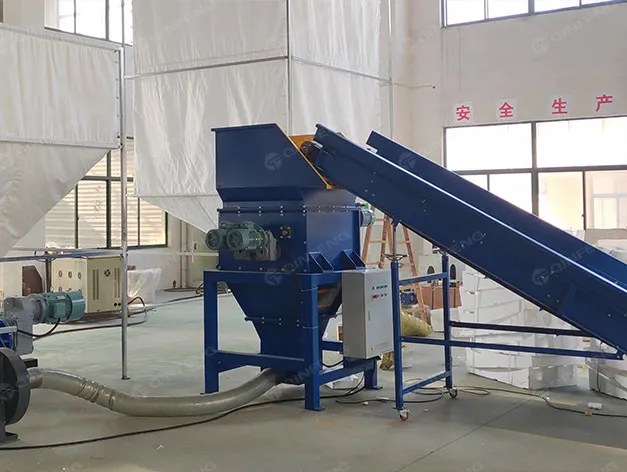
QINFENG’s EPS compactor, designed and manufactured for industries dealing with discarded EPS, can participate in the physical mechanical recycling process. These EPS blocks are then repurchased and turned into plastic pellets, transforming the expanded EPS into rigid plastic for the production of new plastic products.
Through QINFENG’s EPS hot melt recycling line, the generated waste EPS is placed into the crushing device of the EPS compactor. When the four-axis crushing blade is working, the material continues to move downward. Cut into smaller pieces by cutting blades. The blower then transports the material to a storage silo where it is melted in a hot melt machine. These EPS blocks are then compressed and extruded by the compression device and screw, yielding EPS blocks. The equipment has an output of 200-250 kg/h. These compressed EPS blocks are not only easy to store and transport but can also be used to make new plastic products.


EPS Foam Compactor: A Key Technica…
In the modern logistics and warehousing industry, EPS (Expanded Polystyrene, commonly known as foam plastic) is widely used as cushioning packaging m…
Read moreHigh-Power Foam Densification Comp…
The Heavy Burden of Lightweight Materials Against the backdrop of intensifying global efforts to combat plastic pollution, the efficient recycling o…
Read moreThe Physical Recycling Pathway for…
The Heavy Burden of a Lightweight Material Polystyrene foam (including Expanded Polystyrene EPS and Extruded Polystyrene XPS), leveraging its lightw…
Read more