EPS Foam Recycling Grows in Winter – EPS Cleaning Production Line/Screw Type Film Squeezer machine
2024-12-04
Overcoming the Challenges of Food Residue in EPS Containers
One of the biggest hurdles in EPS foam recycling, particularly in food service, is the food residue that often remains in EPS containers. Food-contaminated EPS presents a significant challenge, as it requires additional cleaning and processing to be properly recycled. However, as EPS recycling technologies evolve, solutions have emerged to address this issue.
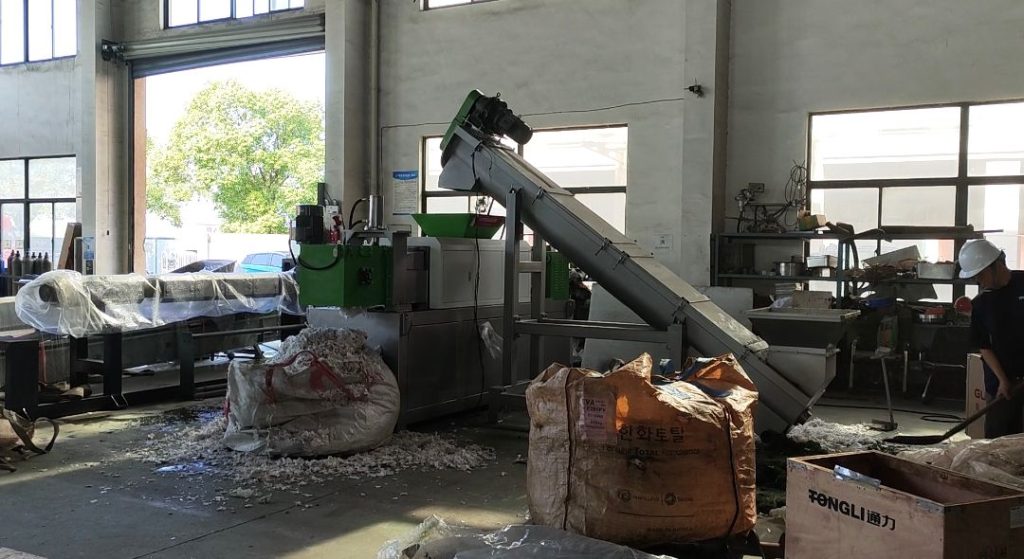
For example, Qinfeng’s EPS cleaning production line provides an effective solution for cleaning EPS containers. This system is capable of completely shredding and cleaning EPS foam containers, ensuring that food remnants are removed efficiently. When paired with Qinfeng’s Screw Type Film Squeezer machine, which further dehydrates and compacts the material, clean and reusable EPS can be easily obtained. This solution not only makes the recycling process more efficient but also ensures that the material is adequately prepared for further recycling, such as pelletizing or manufacturing new products.
A Circular Economy for EPS: The Path Forward
By utilizing Professional Systems like EPS compactors and cleaning production lines, the EPS recycling process becomes more streamlined and sustainable. With the ability to clean and compress EPS, recyclers can minimize waste. Valuable secondary raw materials can be created and contribute to the circular economy. As EPS recycling technology continues to improve, these systems will play a key role in reducing the environmental footprint of EPS packaging.

The future of EPS foam recycling lies in a comprehensive, integrated system. A system that can efficiently collect, clean, compress, and reprocess EPS foam. As more companies adopt these systems, the cycle of EPS waste will continue to shorten. Turning what was once a major environmental challenge into a valuable resource for other industries.
In summary, while the debate over EPS foam bans continues, the development and implementation of efficient recycling systems, such as those provided by Qinfeng, provide a practical and sustainable solution for managing EPS waste. Through effective recycling practices, we can ensure that EPS continues to be a useful material while mitigating environmental impacts.


EPS Foam Compactor: A Key Technica…
In the modern logistics and warehousing industry, EPS (Expanded Polystyrene, commonly known as foam plastic) is widely used as cushioning packaging m…
Read moreHigh-Power Foam Densification Comp…
The Heavy Burden of Lightweight Materials Against the backdrop of intensifying global efforts to combat plastic pollution, the efficient recycling o…
Read moreThe Physical Recycling Pathway for…
The Heavy Burden of a Lightweight Material Polystyrene foam (including Expanded Polystyrene EPS and Extruded Polystyrene XPS), leveraging its lightw…
Read more