Fruit Foam Plastic Packaging-QINFENG’s Foam EPS Compactor recycling
2024-01-22
The use of foam plastic packaging is widespread in our daily lives, especially in the packaging of fruits such as apples, pears, and oranges. Each fruit is typically wrapped in a resilient, mesh-like white packaging. For smaller fruits like cherries, there is often a thicker layer of white plastic film covering the entire box. Some fruits are packaged similarly to seafood, entirely wrapped in white plastic. These foam packaging types include EPS foam and EPE foam, commonly used in fruit packaging. With the increasing awareness of environmental protection, residents can now send these foam materials to designated recycling locations or wait for professional recyclers to collect them.
1. Foam use
The foam packaging commonly used in our daily life is usually made of EPS. It plays an important role in slowing down the aging process of fruits and vegetables and extending their shelf life.. They are often used in the long-distance transportation and extended storage of fresh fruits.
Fruits enclosed in foam-made nets can maintain their freshness and shelf life while preventing damage. This packaging is also an excellent choice for supermarkets. The mesh packaging can be produced in any size and shape according to buyer requirements. It is made of high-density polyethylene foam (EPE), heated during the extrusion process, and then combined with food-grade anti-shrink agents and industrial-grade ultrafine talcum powder to create the net. Additionally, the fruit nets made from EPE foam are recyclable.
For box-shaped foam plastic packaging made of EPS polystyrene foam, besides maintaining the freshness and shelf life of fruits and preventing damage, it can also incorporate ice for low-temperature preservation. In the transportation of fruits like lychees, EPS polystyrene foam packaging boxes are crucial.
2. Recycling
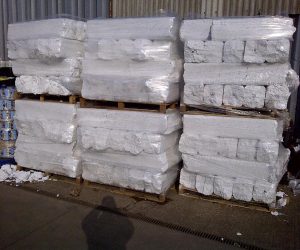
For the recycling of such packaging, QINFENG’s EPS foam compactor machine is an ideal and reliable choice for customers. QINFENG’s CF-HCP400 EPS Cold Press Line Polystyrene Foam Compaction Machine is suitable for waste processing, including EPS (expanded polystyrene foam), EPE, PUR, EVA, and more. The foam material is ground, screened into smaller sizes, and then pushed into the screw by the main motor. The hydraulic system on the mold head presses down on the EPS material, which is then discharged in chunks. The material is compressed by an 80-ton hydraulic station to form the final product. After hydraulic compaction, the density of foam waste typically increases from 30 kg/m3 to around 300-400 kg/m3. It then becomes a high-value commodity for producers of recycled plastic pellets.

Moreover, EPS blocks can be crushed again for processing into the next unit.
3. Cooperation
Furthermore, QINFENG’s engineers can customize structures that better fit the customer’s main recycled foam plastic material size, ensuring higher recycling efficiency. QINFENG looks forward to collaborating with you.


EPS Foam Compactor: A Key Technica…
In the modern logistics and warehousing industry, EPS (Expanded Polystyrene, commonly known as foam plastic) is widely used as cushioning packaging m…
Read moreHigh-Power Foam Densification Comp…
The Heavy Burden of Lightweight Materials Against the backdrop of intensifying global efforts to combat plastic pollution, the efficient recycling o…
Read moreThe Physical Recycling Pathway for…
The Heavy Burden of a Lightweight Material Polystyrene foam (including Expanded Polystyrene EPS and Extruded Polystyrene XPS), leveraging its lightw…
Read more