Foam Recycling: The EPS Compactor Opens a Circular Economy Path for Polystyrene Material Recycling
2025-08-22
Academic Initiative in Material Valorization
Montclair State University’s Green Team from New Jersey has established an advanced environmental program focused on value-added product development. Students currently market premium picture frames manufactured from reprocessed polystyrene ingots, ensuring diverted waste materials avoid landfill deposition or aquatic contamination. This initiative represents a genuine closed-loop recycling model applicable within circular economy frameworks.

Geographical Implementation Scope
The FOAMCYCLE project currently operates across more than 30 locations including New Jersey, Colorado, Florida, Illinois, Kentucky, New Hampshire, North Carolina, Ohio, Pennsylvania, Tennessee, Vermont, Wisconsin, and Quebec, Canada, with recent expansion into Connecticut. This geographical diversity demonstrates the replicability of the processing methodology across varying regulatory and operational environments.
Processing Technology Specifications
Central to the operation are industrial EPS Compactors that mechanically densify waste foam through simultaneous compression and deaeration processes. These systems transform bulky expanded polystyrene into standardized ingots meeting quality specifications for subsequent manufacturing applications. Only material processed through such compaction equipment qualifies for certification as recycled content in secondary products.
Material Transformation Protocol
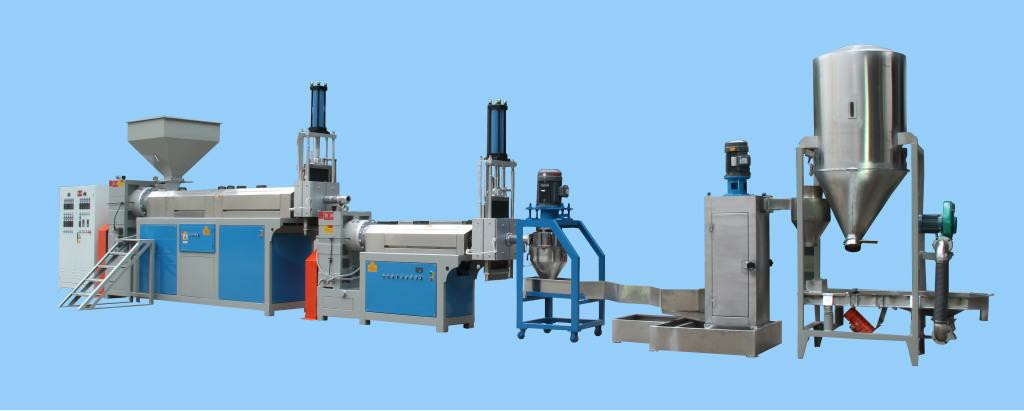
Beyond initial compaction, the program implements comprehensive material reprocessing whereby compressed ingots undergo pelletization for manufacturing readiness. This secondary transformation enables seamless integration with conventional injection molding and extrusion systems, moving beyond basic waste management toward true resource circularity. The production of plastic granules establishes(Pelletizing Line) bridge between recycling operations and industrial manufacturing sectors.
Environmental Impact Mitigation
Project implementation addresses both pollution prevention and resource conservation objectives simultaneously. By intercepting foam waste streams before environmental dispersal, the initiative reduces microplastic contamination risks while recovering material value. The program’s expansion across multiple jurisdictions confirms its operational viability and environmental effectiveness beyond theoretical models.
Economic and Ecological Reconciliation
Founder Lou Troiano’s demonstration of gold-plated frames symbolizes the program’s success in transforming waste into marketable products. This achievement reflects the potential for economically sustainable recycling models that neither rely on perpetual subsidies nor compromise environmental standards. The continuous material reuse pathway effectively demonstrates industrial ecology principles in practice.
Industry Validation and Replicability
The project’s multi-state implementation provides empirical evidence for scalable EPS recycling solutions. Through standardized processing protocols utilizing EPS Cold Compactors and established manufacturing partnerships, the model offers transferable methodology for other educational institutions and community recycling programs. This approach maintains material quality while ensuring economic viability through value-added product creation.
Product Recommendation
The CF-CP380 EPS Cold Compactor from Qinfeng Machinery is designed for large recycling centers, handling materials like EPS, EPP, and other foams with a capacity of 150-200 kg/h. This compactor significantly reduces the volume of waste foam by compressing it from a density of 30 kg/m³ to 330 kg/m³, turning it into high-value recyclable blocks. Equipped with advanced features, including a 2.2kw crusher and a 15kw screw motor, this machine helps streamline the recycling process for supermarkets and large EPS waste centers.



EPS Foam Compactor: A Key Technica…
In the modern logistics and warehousing industry, EPS (Expanded Polystyrene, commonly known as foam plastic) is widely used as cushioning packaging m…
Read moreHigh-Power Foam Densification Comp…
The Heavy Burden of Lightweight Materials Against the backdrop of intensifying global efforts to combat plastic pollution, the efficient recycling o…
Read moreThe Physical Recycling Pathway for…
The Heavy Burden of a Lightweight Material Polystyrene foam (including Expanded Polystyrene EPS and Extruded Polystyrene XPS), leveraging its lightw…
Read more