EPS Compactor: A Reliable Assistant for Foam Manufacturers
2025-01-16
Introduction: A Green Path from Crisis to Solution
According to data from the U.S. EPS Industry Alliance (EPSIA), approximately 155,000 tons of foam waste are generated annually in the United States, with a recycling rate of less than one-quarter. This situation poses a significant challenge for foam manufacturers. If the accumulation and disposal of foam waste during production are not effectively addressed, it can lead to high operational costs, harm a company’s reputation, and compromise workplace safety.
However, the introduction of the eps cold compressor provides a green and efficient solution to these issues. This article explores three major challenges associated with foam recycling and demonstrates how the EPS compactor can help manufacturers overcome these obstacles while contributing to the global environmental cause.
The Social Responsibility Challenge of Traditional Recycling Methods
The Risks of Burning and Landfilling
For years, incineration and landfilling have been the primary methods for foam recycling, with landfilling being particularly prevalent in the United States. However, both approaches have significant drawbacks. Incinerating foam releases harmful gases, worsening air pollution and exacerbating the greenhouse effect. Landfilling, on the other hand, does not effectively break down foam materials and can lead to long-term contamination of coastal areas and groundwater supplies. These issues not only harm the environment but also tarnish a manufacturer’s image as a responsible and environmentally conscious enterprise.
The Environmental Advantages of EPS Compactors
In contrast to traditional methods, EPS compactor utilize cold compression or hot melting technologies to achieve pollution-free recycling. The equipment compresses waste foam into dense blocks, preventing secondary pollution and enhancing its reusability. This green recycling approach enables foam manufacturers to strengthen their image of social responsibility, earning public and market trust.

The Financial Challenge of High Operational Costs
Costs of Storage and Waste Management
As a low-density material, foam occupies significant storage space in its uncompressed form, driving up warehousing expenses. Additionally, waste management and transportation costs in traditional recycling methods can be substantial, creating ongoing financial pressure for foam manufacturers.
Cost Optimization through Compaction Technology
EPS compactors offer a compression ratio of up to 50:1, significantly reducing foam volume and storage requirements. Furthermore, compressed foam can be sold or reused, turning waste into a resource and generating additional revenue streams. This dual benefit not only alleviates operational cost pressures but also supports a company’s long-term financial sustainability.

The Safety Challenge of Fire Hazards
The Flammable Nature of Foam
Foam plastic is highly flammable, and in production facilities, foam particles and dust often accumulate, creating a high risk of fires and explosions. Many foam factories have suffered severe losses due to such incidents, making fire hazards a critical safety concern for manufacturers.
Fire Prevention with EPS Compactors
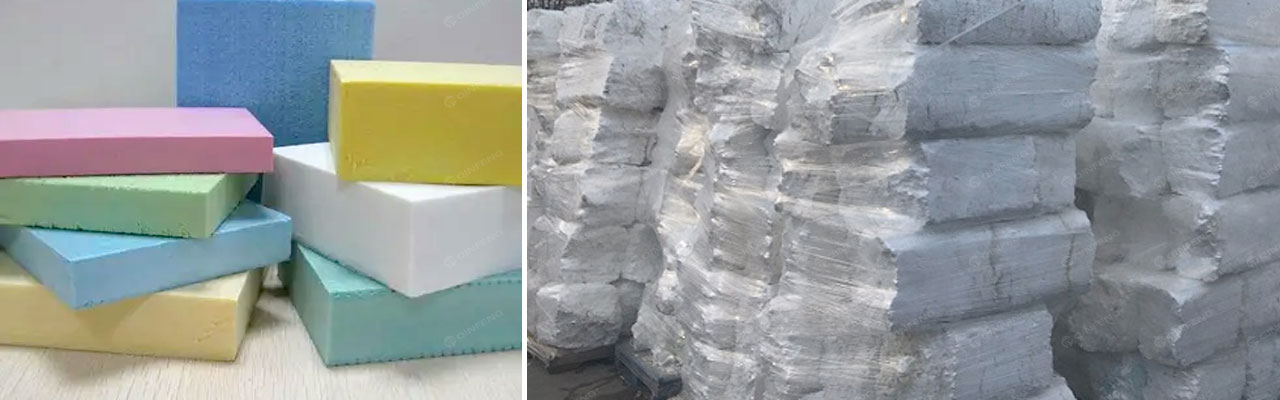
EPS cold compressor mitigate fire risks by transforming foam into dense blocks using hot melting technology. The resulting material has reduced flammability, significantly lowering the likelihood of fire outbreaks in production facilities. Additionally, compactors help reduce dust accumulation, further improving workplace safety.
Conclusion: Advancing Toward a Future of Environmental and Economic Synergy
The EPS compactor is not only an effective tool for addressing common operational challenges faced by foam manufacturers but also a vital technology for fostering green development and circular economies. By reducing environmental pollution, optimizing operational costs, and enhancing workplace safety, the EPS screw compactor creates multiple layers of value for manufacturers.
In the long run, promoting the adoption of EPS screw compactor can address environmental issues caused by foam plastic while injecting new momentum into global environmental protection efforts. As a key element of the environmental field, this professional technology enables manufacturers to achieve both economic benefits and environmental sustainability.


EPS Foam Compactor: A Key Technica…
In the modern logistics and warehousing industry, EPS (Expanded Polystyrene, commonly known as foam plastic) is widely used as cushioning packaging m…
Read moreHigh-Power Foam Densification Comp…
The Heavy Burden of Lightweight Materials Against the backdrop of intensifying global efforts to combat plastic pollution, the efficient recycling o…
Read moreThe Physical Recycling Pathway for…
The Heavy Burden of a Lightweight Material Polystyrene foam (including Expanded Polystyrene EPS and Extruded Polystyrene XPS), leveraging its lightw…
Read more